AI engineering and architecture

Build Systems.
Move Numbers.

Processes and systems built with AI, measured against the business goal.

AI architecture, process redesign and hands-on engineering, delivered by one person who understands the technology, the process and the business case at the same time.

Vendor-independent AI Process redesign Hands-on engineering
The ODB Way

How we work.

01
FRAME Name the number
Revenue, margin, hours, cost per case
02
MAP Follow the real process
Where people wait, retype or guess
03
SHIP Into your own stack
Vendor-independent, no lock-in
04
PROVE Check, do not trust
Measured against the number from step one

Objective. Design.
Build.

ODB is both the initials of Onno de Bel and the order the work runs in. Objective first, then the process, then the technology. Run that order backwards and you get software that demos well and changes nothing.

O

Objective

Start with the number that has to move. Revenue, margin, hours per order, cost per case. No number to move, no project.

D

Design

Then the process. How the work runs today, where it breaks, who touches it. The system is shaped around that, not the other way around.

B

Build

Then the technology. Working software in production, measured against the number you started with. Not a pilot that quietly stops.

From AI bolted on
to AI built in.

The difference is not which model you pick. It is whether the process around it holds when that model changes.

The Old Way
A pilot running next to the process
Nobody can name the number it moves
Provider keys pasted into the app
never rotated
Everything depends on one model
Output taken on trust
Cost per run only shows up on the invoice
The ODB Way
A step inside the process itself
One business number per use case
Keys held outside the app and rotated
Any model swappable without a rewrite
Output checked against a source
Cost per run visible in the system

The result

Ask for the contract. Ask for the number.
AI you can prove, not just demo.

View the Process

From business goal
to system in production.

Four steps in a fixed order: the goal first, then the process, then the technology. Never the other way around.

01

Frame

Start with the number that has to move: a cost, a conversion rate, a lead time. Nothing gets designed or built before that number is on paper.

02

Map

Map the process as it actually runs, not the way it is supposed to run. The steps where people wait, retype or guess are the ones worth automating.

03

Ship

Build into the stack you already have. The AI layer stays vendor-independent: every call declares what it needs, so models can be swapped without a rewrite.

04

Prove

Model output gets checked, not trusted. Measure against the number from step one, track cost per run and drop to the cheapest model that still passes the checks.

“If it does not move a number, it is a demo.”

Onno de Bel, ODB Growth

What ODB Growth builds

Six areas of work. In each one the order is the same: business goal, then process, then technology.

Commercial Systems and Outreach

The CRM assigns the next action instead of storing it. Sourcing, enrichment and follow-up run as one chain underneath, with Bright Data and FullEnrich doing the data work.

AI Architecture

Changing AI provider is a configuration change, not a rewrite. Every call site declares the wire contract and the minimum capability level it needs, and the register refuses an assignment that does not meet both, across two separate stacks.

Diagnose it with the AI Integration Scan

Model Routing and Cost Control

An optimizer picks the cheapest model that still meets the declared level, on every call. The provider catalog lists prices next to terms: jurisdiction, training rights, opt-out, retention.

Retrieval and Knowledge Systems

Your documents, tickets and contracts searchable by meaning instead of exact wording, on pgvector inside Postgres. One database to back up, not a second system to keep in sync.

Diagnose it with the AI Integration Scan

Agents, Tools and MCP

An agent can only call what you defined. Models connect to your systems through MCP servers and typed tools, not open-ended access, and one of those servers is open source, so you can read the code before you trust it.

Process Redesign and Build

The workflow is redesigned first, then built: web apps, PWAs, APIs and the integrations underneath. What gets delivered is working software.

Start with a diagnosis

Not sure where to start? Get your score first.

Two free 10-minute diagnostics. One clear number, your three biggest gaps, and the fix that moves first. No pitch.

Prefer to talk first? Book a Growth Call →

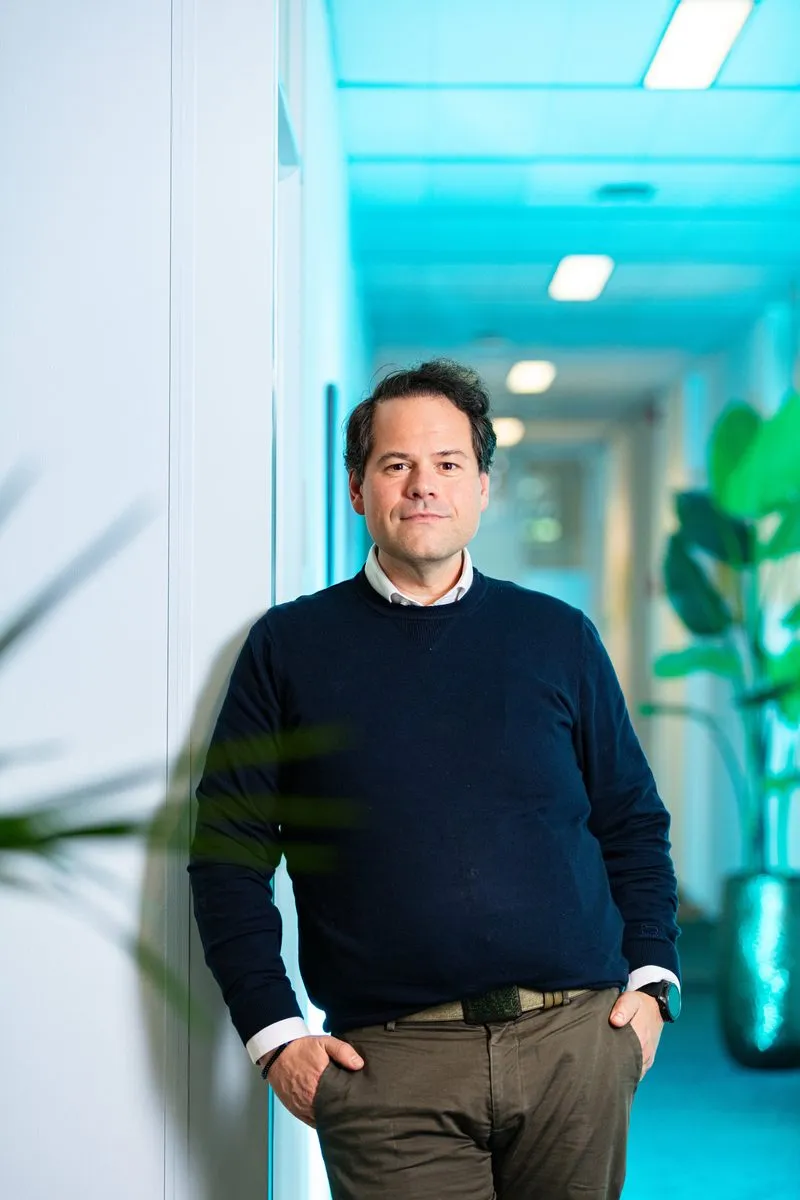
Onno de Bel, Founder of ODB Growth

“First the business goal, then the process, then the technology. Turn that order around and you get a demo nobody uses.”

Onno de Bel

Onno de Bel

AI Engineer & Architect

In February 2023, Dutch business radio BNR ran a programming contest: ChatGPT against my own development team. I have built with language models ever since. That work is in production now, not in a lab. A vendor-independent AI layer running in two stacks: every call site declares its wire contract and a minimum capability level, and the optimizer picks the cheapest model that still meets it. A provider catalog that tracks price alongside jurisdiction, training rights, opt-out and retention. A RAG platform on pgvector. An open-source MCP server.

Before that I ran Sterrk for 13 years. B2B tech consultancy: 30 people on the payroll, over 100 freelance tech professionals in the field, EUR 10 million in revenue, and full responsibility for the profit and loss. I priced the work, hired the people and carried the bad quarters. Technical depth and commercial judgment rarely sit in the same person. I have both, and I write the code myself. So the conversation about your process and the conversation about your code are the same conversation.

Hands-on I build it myself. The person who scopes the work is the person who writes the code.
Direct I say what I see. If a process needs fixing before it is automated, I will say so, even when it costs me the build.
Measurable Every automation reports what it ran, what failed and what it cost. The cost meter is built in, not promised later.
Independent No lock-in. The code sits in your repository, the keys are in your name, and the AI layer switches model providers without a rewrite.
Plan a Growth Call Connect on LinkedIn

Execution over theory.

A strategy document has never processed an invoice. Working software has. So every engagement ends with something running in your stack and doing real work, not a report on what could be built.

01

AI Architecture

Switching AI providers is a configuration change, not a rewrite. Every call site declares its wire contract and the minimum capability it needs, and a register rejects what does not fit, so the model stays replaceable instead of load-bearing.

02

Cost and Risk Control

Spend shows up as it happens, not a month later on the invoice. Providers are scored on price and on terms: jurisdiction, training rights, opt-out, retention, and the optimizer picks the cheapest model that still clears the bar.

03

Data and Retrieval

Your own documents and systems become context the model can use, and every answer points back to the document it came from. Built on a RAG platform on pgvector and an open-source MCP server.

04

Commercial Automation

Built by an engineer who ran a 30-person B2B firm, so the sequence matches how deals actually get sold: sourcing, enrichment and outreach as one chain, with Bright Data and FullEnrich underneath.

Practical insights.
No corporate jargon.

AI architecture, process redesign and the commercial systems around them, written by Onno de Bel.

View all Growth Notes

Want AI that moves a number instead of a demo?

Plan a Growth Call

Ready to find out where AI
actually pays in your business?

Let's find out how deeply AI actually runs in your business, and where it pays to build it in.

Plan a Growth Call

Or email directly: onno@odbgrowth.nl