Most AI pilots don't die in a dramatic failure. They die in silence. Here are the four places where AI initiatives quietly stall, and why nobody notices in real time.
AI pilots do not die in big dramatic moments. So most teams blame the wrong things: the model was not good enough, the use case was wrong, the team was not ready. That is rarely where pilots are actually lost. Instead, you lose them in silence, in the gap between the demo that impressed everyone and the production budget that never got approved.
In the pilot that quietly stopped getting updates six weeks after launch. In the champion who moved teams and took the only working knowledge of how it was built with them. And in the tool that shipped, worked, and nobody ever measured whether anyone kept using it. Those are the four places AI pilots die, and in every organisation with an AI initiative, the same four show up: quietly, repeatedly, almost always unnoticed.
What a quiet AI death actually looks like
A pilot does not usually fail in one moment. It stops compounding, quietly, without anyone noticing in real time. The demo goes well, so the follow-up meeting slips by a week, then a month, then it is simply not on anyone’s calendar anymore. Nobody cancelled it. It just stopped being anyone’s job.
Leak one: no owner after the demo
A pilot has an owner during the build. It rarely has one after the demo. The person who championed it moves to the next priority, the credit for a good demo has already been claimed, and there is no explicit handoff to whoever is supposed to carry it into production. Without an owner, a pilot does not get killed. It just stops moving.
Leak two: no budget line for “after the pilot”
Pilot budgets are easy to approve, because the number is small and the risk feels contained. Production budgets are a different conversation, one that requires a business case, a champion willing to defend it, and a number the pilot never generated because it was never measured against one. So the pilot sits in a folder labelled “promising,” permanently, because nobody built the case for the next step while the enthusiasm was still fresh.
Leak three: the knowledge leaves with the person
Most pilots are built by one enthusiastic person, in whatever tool they found first, documented nowhere. When that person changes roles, gets pulled onto something urgent, or simply moves on, the pilot does not get maintained. It gets rediscovered eighteen months later by someone who has to start over, because nothing about how it worked survived the person who built it.
Leak four: nobody measures adoption
A tool can ship, work correctly, and still fail, if nobody checks whether people kept using it after the first week. Adoption without measurement looks identical to success right up until someone asks a hard question in a budget review and nobody has an answer. The tool is technically still live. Whether it is still doing anything is a separate question that was never asked.
Introducing AI is only half the job. The other half is the resistance, and resistance does not announce itself. It just quietly wins.
Why this compounds instead of staying small
One dead pilot is a rounding error. Four or five dead pilots over two years is a pattern that quietly poisons the next proposal, because the room remembers “we tried that already” far more clearly than it remembers why the previous attempt actually stalled. The technology gets blamed for what was really an ownership gap, and the next genuinely good idea gets a harder hearing than it deserves.
The ODB Way
At ODB Growth, a pilot is not the deliverable. Working software in production, measured against the number it was supposed to move, is the deliverable. That means an owner is named before the build starts, not after the demo. It means the business case for production is written down at the start, not reconstructed under pressure later. And it means adoption gets measured from week one, so the answer to “is anyone still using this” is a number, not a guess.
If it does not move a number, it is a demo. Closing the four leaks above is how a demo becomes something the business can actually depend on.
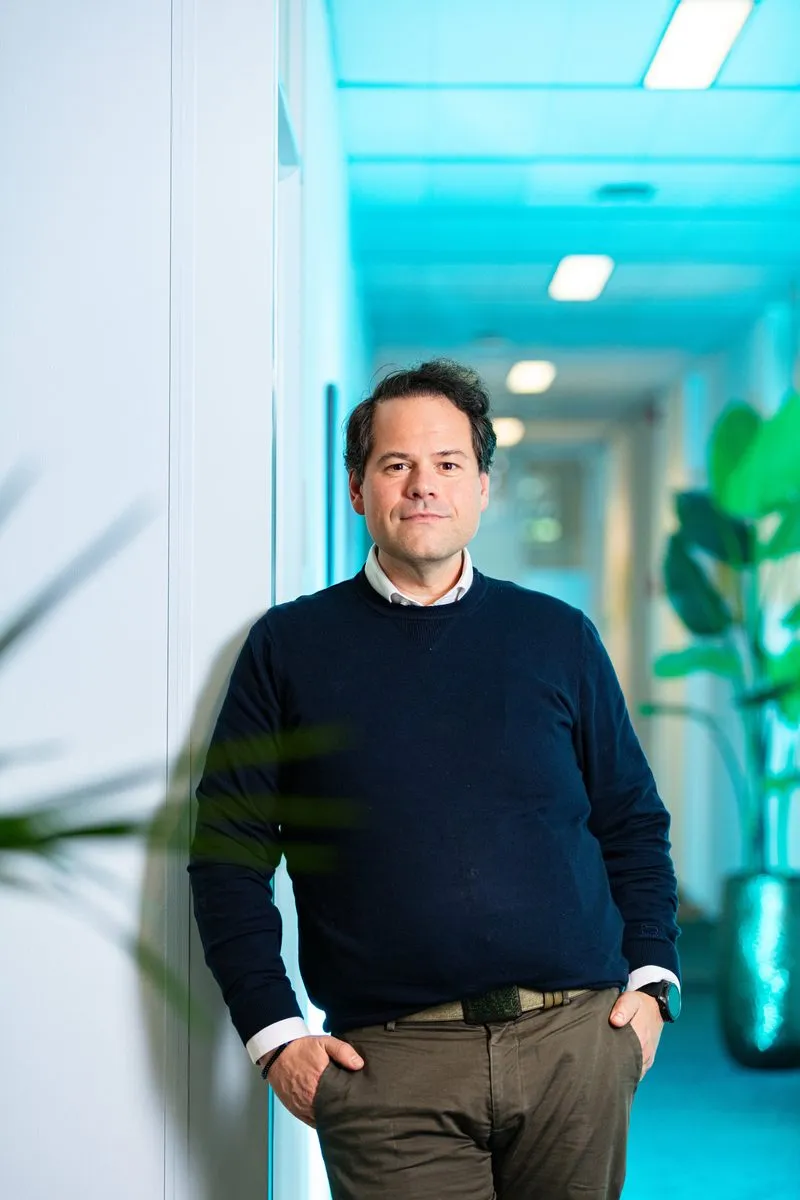
Onno de Bel
AI Engineer & Architect | ODB Growth
Ready to build something
that moves a number?
Let's find out where AI actually pays in your process, and build it.
Plan a Growth Call